
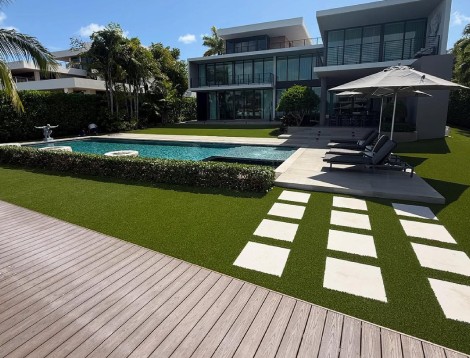
If you’re a homeowner in Fort Lauderdale, Pompano Beach, or anywhere in South Florida, chances are you’ve looked at your lawn during peak summer and thought: there has to be a better way.
Florida’s heat, humidity, heavy rains, drought restrictions, and relentless lawn care demands make the artificial turf vs. real grass debate more relevant here than almost anywhere else in the country. Both options have genuine advantages — and real drawbacks — that depend on your specific property, budget, HOA rules, and how you actually use your outdoor space.
This guide breaks it all down so you can make a confident decision for your home.
Why This Decision Is Different in South Florida
Before diving into the comparison, it’s important to recognize that the artificial turf vs. grass debate looks very different in Fort Lauderdale than it does in, say, Ohio or California.
- Florida’s climate is brutal on natural grass. Heat, fungal diseases, chinch bugs, and alternating drought/flood cycles make maintaining a lush natural lawn expensive and labor-intensive year-round.
- Water restrictions are real. Broward County and Fort Lauderdale frequently impose mandatory irrigation restrictions — especially during drought conditions. Natural lawns require consistent watering to survive.
- HOAs have varying rules. Some South Florida communities have embraced artificial turf; others still prohibit it or require specific types and colors. Always verify before installing.
- Heat factor is critical. Artificial turf absorbs and radiates significantly more heat than natural grass — a major consideration in a region where outdoor comfort is everything.
Artificial Turf: Pros & Cons for Fort Lauderdale Homes
The Benefits
Near-zero maintenance. Once installed, artificial turf doesn’t need mowing, fertilizing, aeration, or pest treatments. For busy homeowners or those who travel frequently, this is a game-changer.
Water savings. The average Fort Lauderdale home uses significant water on lawn irrigation. Synthetic turf eliminates that entirely — a meaningful reduction in your water bill and environmental footprint.
Stays green year-round. No dry patches during drought, no brown spots during cold snaps. Your lawn looks the same in August as it does in February.
Durability for high-traffic areas. Families with kids and dogs who run the same paths repeatedly often find artificial turf holds up far better than natural grass, which develops bare patches under consistent foot traffic.
Long-term cost savings. The upfront cost is higher, but you eliminate lawn service fees, fertilizer, irrigation, and pest control costs. Most homeowners break even within 5–7 years.
The Drawbacks
Heat retention. This is the most significant downside in South Florida. Artificial turf can reach temperatures of 150°F–180°F on a sunny Florida afternoon — far hotter than the surrounding air. This limits barefoot use and can be uncomfortable for pets.
Higher upfront cost. Quality artificial turf installation in Fort Lauderdale typically runs $8–$20 per square foot installed, depending on materials and preparation required.
It’s not natural. Synthetic turf doesn’t support local pollinators, doesn’t absorb stormwater as effectively as natural grass, and doesn’t contribute to the micro-ecosystem in your yard.
Odor if not maintained. In homes with pets, synthetic turf requires regular rinsing and deodorizing to prevent odor buildup — especially in Florida’s heat.
Natural Grass: Pros & Cons in Fort Lauderdale
The Benefits
Cooler surface temperature. Natural grass stays dramatically cooler than artificial turf through the evaporation process. Barefoot evenings on real grass are a staple of Florida living.
Environmental benefits. Natural grass supports pollinators, absorbs stormwater, produces oxygen, and contributes to the local ecosystem.
Lower upfront cost. Sod installation costs a fraction of synthetic turf — typically $1–$2.50 per square foot installed, depending on grass type.
Accepted everywhere. No HOA restrictions, no neighbor debates, no questions about resale impact.
The Drawbacks
Ongoing maintenance costs add up. Lawn care in Fort Lauderdale — mowing, fertilizing, pest control, irrigation — easily runs $2,000–$5,000+ per year for a typical residential lot.
Florida’s climate is harsh on grass. St. Augustine grass (the most common choice in South Florida) is susceptible to chinch bugs, gray leaf spot fungus, and stress from alternating drought and flooding. Keeping it lush requires consistent attention.
Water demands conflict with restrictions. Maintaining a healthy natural lawn requires regular irrigation, which puts homeowners at odds with Broward County water restrictions during dry periods.
High-traffic areas don’t hold up. Under regular foot traffic from kids, dogs, or backyard entertaining, natural grass thins out and develops bare patches that need regular reseeding or re-sodding.
Side-by-Side Comparison
| Factor | Artificial Turf | Natural Grass |
|---|---|---|
| Upfront Cost | $8–20/sq ft installed | $1–2.50/sq ft installed |
| Annual Maintenance | Very low ($200–500) | High ($2,000–5,000+) |
| Water Usage | ✓ None | ✗ High |
| Surface Temperature | ✗ Very hot in summer | ✓ Stays cool |
| Appearance | Consistently green | Variable (seasonal/care) |
| Durability (high traffic) | ✓ Excellent | ✗ Develops patches |
| Environmental impact | ✗ Non-biodegradable | ✓ Supports ecosystem |
| HOA Restrictions | Varies — check first | ✓ Always accepted |
| Lifespan | 15–25 years | Indefinite (with care) |
| Pet-Friendly | Yes, requires maintenance | Yes, may develop patches |
| Break-Even Timeline | ~5–7 years | N/A (ongoing cost) |
The Hybrid Approach: The Best of Both Worlds
An increasingly popular option for Fort Lauderdale homeowners is a hybrid lawn — combining artificial turf in specific high-traffic or high-maintenance areas with natural grass in others.
For example:
- Use artificial turf in the side yard where nothing grows anyway, under the swing set, or along the dog run — areas that see heavy use and constant irrigation.
- Keep natural grass in the main backyard and front yard for aesthetics, cooling, and HOA compliance.
This approach lets you dramatically reduce maintenance costs and water usage without fully committing to synthetic turf — and it’s often HOA-friendly when natural grass is retained in street-facing areas.
Best Artificial Turf Types for South Florida
Not all synthetic turf is created equal. For Fort Lauderdale’s climate, look for:
- UV-stabilized fibers — Florida’s sun is intense year-round. Low-quality turf fades and degrades quickly without proper UV protection.
- Proper drainage systems — Fort Lauderdale averages 65 inches of rain annually. Your turf must be installed over a drainage base that handles our heavy downpours without pooling.
- Heat-reflective technology — Newer turf products incorporate heat-reflective coatings or lighter-colored infill to reduce surface temperature by 30–50°F compared to older materials.
- Antimicrobial infill — For homes with pets, antimicrobial infill materials (like cork or crumb rubber alternatives) help control odors in Florida’s heat.
Frequently Asked Questions
Is artificial turf allowed in Fort Lauderdale?
Fort Lauderdale permits artificial turf in residential properties, but regulations vary by neighborhood and HOA. Some communities require that turf in front yards match specific color standards or be accompanied by natural ground cover. Always check with your HOA and the City of Fort Lauderdale Building Department before installation.
How hot does artificial turf get in Fort Lauderdale summers?
On a typical South Florida summer day with full sun, standard artificial turf can reach 150–180°F — hot enough to burn bare feet and paws. Modern heat-reflective turf products reduce this significantly, but it remains the single biggest consideration for outdoor use in our climate. Natural shade from trees helps substantially.
How much does artificial turf installation cost in Fort Lauderdale?
For a typical Fort Lauderdale residential installation, expect $8–$20 per square foot fully installed. A 500 sq ft area runs approximately $4,000–$10,000 depending on material grade, ground preparation needed, and drainage requirements. Premium heat-reflective or pet-friendly products sit at the higher end of this range.
What’s the best grass for Fort Lauderdale if I stick with natural lawn?
St. Augustine grass (particularly ‘Floratam’ variety) is the most widely used in South Florida for its heat tolerance and ability to handle our humidity. Zoysia grass is gaining popularity as an alternative — it’s denser, handles drought better, and resists chinch bugs more effectively. Bermuda grass works well in full-sun areas but thins under shade.
Does artificial turf hurt resale value?
It depends on the buyer. In South Florida’s current market, high-quality artificial turf installation is increasingly viewed as a value-add — especially among buyers who don’t want the burden of lawn maintenance. Low-quality or poorly installed turf can be a negative. Always use quality materials and professional installation.
Making the Right Choice for Your Property
There’s no single right answer between artificial turf and natural grass — the best choice depends on your specific situation:
- Choose artificial turf if: You want to eliminate lawn maintenance, have high-traffic areas that destroy natural grass, want to reduce water bills, or have dogs that need a durable surface.
- Stick with natural grass if: HOA rules require it, you use your backyard for barefoot activities, you value environmental benefits, or your property has significant natural shade that keeps grass healthy.
- Consider hybrid if: You want to reduce maintenance without fully converting, or if certain areas of your property need turf while others are better served by natural grass.
Not Sure Which Is Right for You?
Get a free consultation from TotalScape Design’s landscaping experts. We’ll assess your property, your HOA requirements, and your lifestyle to help you make the right call — artificial turf, natural grass, or the perfect hybrid.